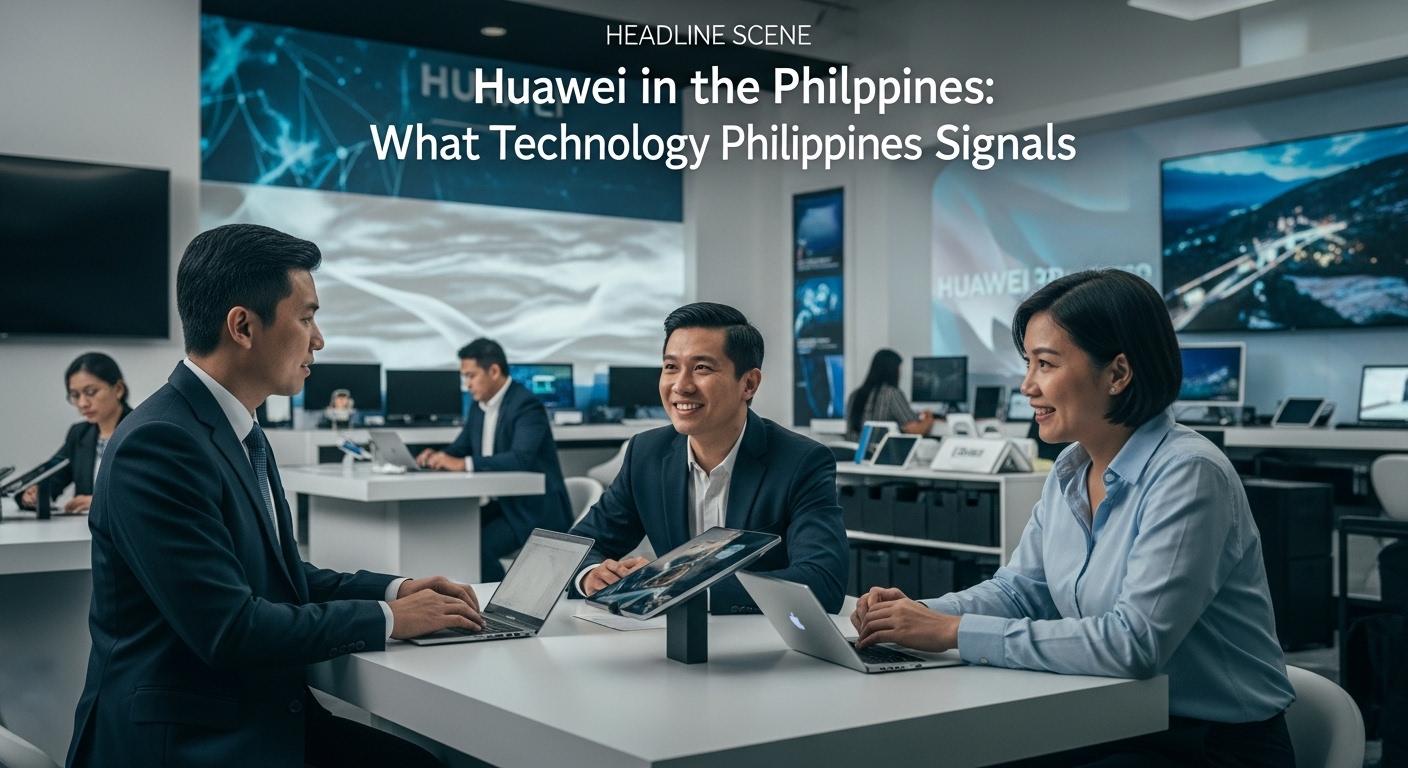
This analysis probes Huawei’s evolving role in the Philippines amid a national push to standardize and accelerate digital innovation. It asks what Technology Philippines signals for Huawei’s long-term strategy, especially as the country shores up artificial intelligence, 5G connectivity, and digital services that touch everyday life. The question is not merely about devices or networks but about alignment with a broader policy agenda that prizes local capacity, transparent governance, and inclusive access to technology.
Vision and policy rarely move in lockstep. In the Philippines, government initiatives like the articulation of a national AI hub and programs to harmonize AI efforts set the frame in which foreign technology players must operate. Huawei’s potential footprint—ranging from network equipment and cloud services to developer training and consumer devices—could either amplify the country’s digital ambitions or test the boundaries of local policy and public trust. The country’s tech press and business community have started to connect the dots: the future of Philippine tech hinges on ecosystems where multinational players collaborate with universities, startups, and local regulators to produce demonstrable benefits for citizens and small businesses.
Huawei’s Philippines Play: Aligning with a National AI Frontier
Beyond hardware and networks, Huawei’s edge in the Philippines depends on software-enabled value. Cloud services, edge computing for remote sites, and developer tools that help Philippine startups prototype AI-driven applications could unlock locally relevant use cases. A conditional emphasis on local job creation—such as technician training, software development, and AI ethics governance—could position Huawei as a partner rather than a vendor. In short, what Technology Philippines signals here is a preference for holistic engagement: infrastructure that scales with governance that protects privacy and security, all while nurturing a homegrown tech workforce.
Policy, Public-Private, and the Philippine AI Hub Context
Policy design in the Philippines increasingly foregrounds harmonization across government agencies, public-private partnerships, and global technology trends. The national AI hub concept—promoted as a platform for experimentation, capacity-building, and pilot deployments—offers a clear invitation for private firms to contribute in concrete, accountable ways. Huawei’s participation would be most credible if it centers on long-term R&D collaboration with Philippine higher education institutions, joint testbeds for AI fairness and explainability, and transparent procurement practices that demonstrate value for money and public benefit. In this environment, regulatory clarity on data localization, cross-border data flows, and cybersecurity will be pivotal. The aim is to avoid piecemeal deployments that create fragmentation and instead foster coherent, scalable programs whose outcomes—jobs, digital literacy, and improved public services—are tangible and measurable.
There are signs the government expects careful calibration. Public discourse around AI ethics, consumer protection, and critical infrastructure resilience is intensifying. Huawei’s reputation will rest not only on technical excellence but also on how it helps the Philippines meet its governance objectives. The best-case frame is a policy-synchronized growth path where multinational technology leaders share risk with local partners and deliver pilots that illustrate real-world benefits in education, healthcare, and agriculture, while respecting privacy and sovereignty considerations. The Manila Times and ABS-CBN coverage of the national AI hub underscore a broad public interest in such outcomes, reinforcing the case that technology is as much about governance as it is about silicon and software.
Economic and Social Impacts: Consumers, Developers, and Government
For consumers, the Philippine technology agenda translates into faster, more reliable connectivity and affordable digital services. Huawei’s devices and networks could contribute to lower prices for bandwidth-intensive applications and to enhanced access in rural or remote areas, provided subsidies or inclusive pricing models are part of the package. For developers and startups, the emphasis should be on an open, supportive ecosystem: access to training, mentorship, pilot funding, and testbeds that help translate ideas into deployable products. Importantly, the Philippines’ focus on AI and digital upskilling aligns with Huawei’s own corporate learning initiatives, potentially creating a mutually beneficial loop where talent remains local, and innovation is domestically anchored rather than stranded in catch-up mode.
From a governance standpoint, the balance between accelerated technology adoption and prudent risk management is delicate. The national AI hub and related programs push for robust standards, data governance, and clear accountability in the use of AI. Huawei’s advantage would lie in offering compliant, defendable solutions that demonstrate transparency in data handling, incident response, and user protections. If executed well, collaborative pilots can show tangible public value—streamlined government services, smarter logistics for agriculture, or personalized health interventions—that also bolster consumer confidence in digital tools. The outcome hinges on a policy environment that rewards responsible innovation without stifling experimentation or inflating costs for end users.
Risks, Trade-offs, and Scenario Framing
No analysis of technology strategy in a developing market is complete without considering trade-offs. A best-case scenario envisions a Philippines where Huawei contributes to a scalable AI-enabled economy through joint research, open standards, and a pipeline of locally trained engineers, with consumer welfare at the center of decision-making. A more cautious scenario contends with data sovereignty concerns, potential vendor lock-in, and the risk that rapid deployments outpace governance capacity. A middle-ground view emphasizes phased deployments, where pilots are closely monitored for public benefit, with explicit sunset clauses and review mechanisms. In all scenarios, the key determinant is whether the partnership prioritizes Philippine interests—jobs, literacy, resilience, and privacy—over short-term market share. The national AI hub framework provides a test bench for such alignment, and progress will be judged by sustained value creation rather than headline-scale technology deployment alone.
Actionable Takeaways
- Monitor regulatory developments around AI governance, data privacy, and 5G infrastructure to understand permissioning and procurement timelines.
- Prioritize local capacity building: establish joint training programs, scholarships, and research collaborations with Philippine universities to grow a homegrown talent pipeline.
- Design transparent AI use cases with privacy safeguards and explainability to build public trust and regulatory credibility.
- Seek pilot opportunities aligned with the national AI hub goals, ensuring measurable public benefits and clear exit or scaling criteria.
- Engage with civil society and consumer groups to align product roadmaps with user needs, affordability, and digital inclusion goals.
Source Context