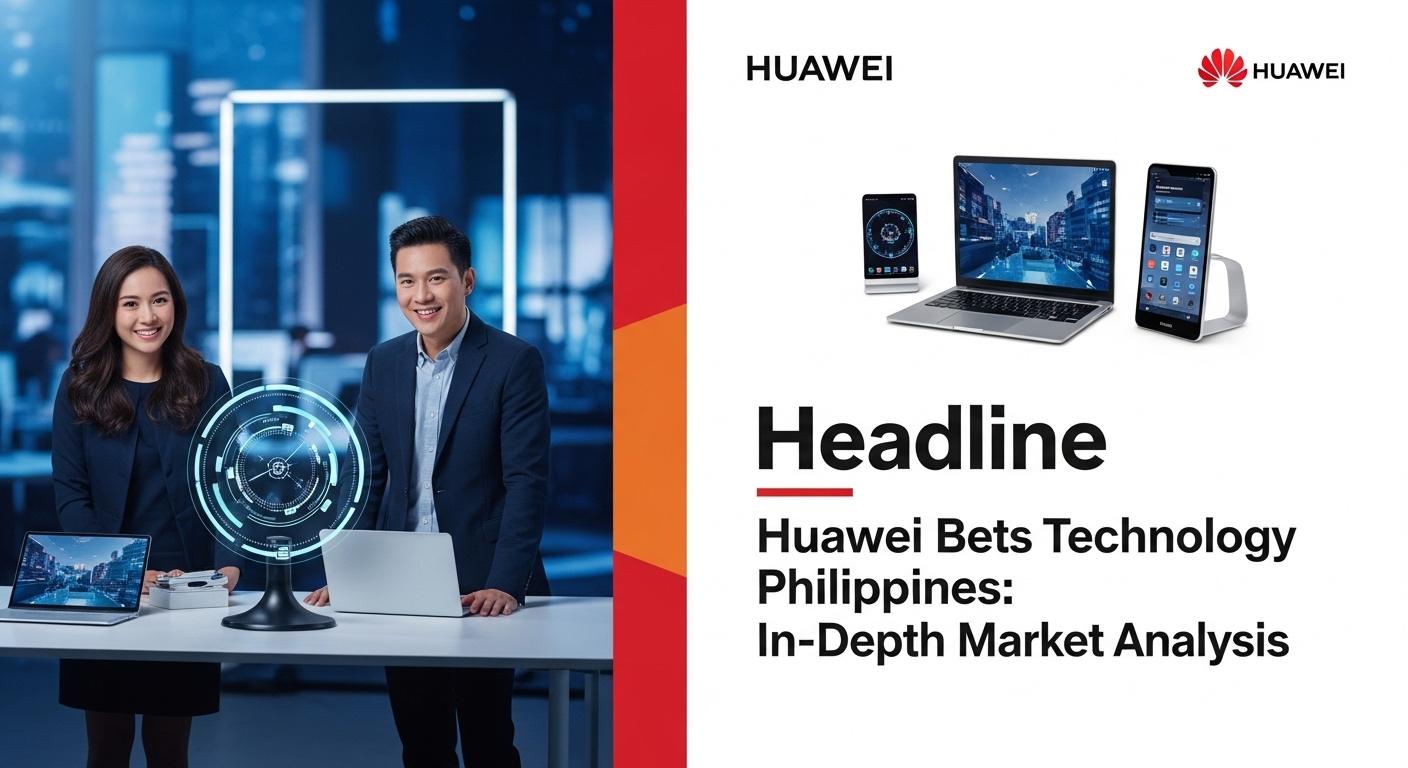
Philippines data center with Huawei branding and local partners, symbolizing investment in local tech infrastructure.
Updated: March 16, 2026
In the Philippines, Huawei’s bets Technology Philippines strategy signals more than a hardware push—it marks a strategic bet on the nation’s digital future, threading data-center expansion, IoT networks, and local partnerships into a broader vision for a resilient tech ecosystem.
The analysis below places those bets in context: energy costs, climate considerations, regulatory landscapes, and the practical realities of rolling out next-generation connectivity to a country that is both geographically complex and highly urbanized.
Rethinking Data Center Investment: Local Capacity and Energy Realities
Philippine policy has encouraged cloud and data center localization as a strategy to improve latency and resilience. Huawei’s positioning in this space is shaped by two forces: the heat and energy demand that heavy computing requires, and the need to align with Philippine power reliability goals. Local data centers are expensive to build and maintain, especially outside Metro Manila, where cooling and electricity costs can erode margins. A pragmatic read is that any significant data-center bet must include partnerships with local utilities, renewables, and perhaps demand-response programs that smooth peak power loads.
What this means for consumers and businesses is not simply faster servers, but a more stable backbone for e-government services, digital banking, and enterprise applications. It also raises questions about data sovereignty and cross-border data flows, which Philippine regulators monitor closely. The heat is real, but the business case is not just for speed—it is for uptime, disaster resilience, and long-term operating costs that matter for a country frequently hit by climate-related disruptions.
IoT, 5G, and the Connectivity Play in the Philippines
Telecom and IoT players in the Philippines are rapidly evolving, and the conversation around Huawei’s role is inseparable from the broader network ecosystem. Reports of partnerships around IoT connectivity management, such as those between Aeris and Globe, illustrate how the market is leaning toward managed services that reduce complexity for enterprise customers. A Philippines-specific strategy would thus require a layered approach: edge-enabled sensors in agriculture, smart cities pilots, and industrial automation for ports and manufacturing. The value proposition hinges on reliable coverage, interoperability across bands, and predictable pricing models for domestic operators and businesses alike.
For Huawei, the challenge lies in coordinating hardware, software, and service components with local carriers, internet exchange points, and regulators, so that IoT deployments are not just technically feasible but also economically sustainable at scale. The Philippines, with a growing startup scene and a strong services economy, could become a proving ground for turnkey IoT systems that integrate cloud, devices, and analytics without creating single points of failure.
Competition, Consumer Devices, and the Local Market
Consumer devices and ’smart’ form factors are a visible battleground in Southeast Asia. Honor’s recent showcases, including gimbal-integrated cameras and robotic-phone concepts, signal that device-makers are chasing creators and content producers who demand portability plus creative tooling. While these launches highlight a vibrant consumer market, the underlying lesson for Huawei is more strategic: differentiation will come through software ecosystems, AI-powered services, and developer-friendly platforms that can plug into local workflows, not just hardware specs or price parity.
In the Philippines, where mid-market devices compete with a growing array of affordable customizations, the transition from hardware-centric strategies to service-led offerings could determine who controls the relationship with end users: big brands, network operators, or local startups building niche solutions around agriculture, logistics, or education.
Policy, Risk, and the Philippine Tech Timeline
Global and domestic policies interact in complex ways that affect how Huawei’s technology bets translate into real deployments. Export controls, cybersecurity standards, and local content rules shape what can be sourced domestically versus imported, and they influence timing. For the Philippines, policymakers emphasize data sovereignty, critical-infrastructure protection, and cyber resilience, all of which require transparent supplier vetting, robust incident response, and clear governance around public-private partnerships. The practical implication for investors and customers is a decision matrix: prioritize reliability and compliance, or chase aggressive price and performance targets at the cost of long-term risk containment.
Actionable Takeaways
- Prioritize layered data-center strategies that pair local energy resilience with green power options to reduce operating risk and carbon footprint.
- Develop clear IoT deployment roadmaps that align with telco partners, regulators, and local communities to ensure scalable and compliant rollouts.
- Invest in local skills and supply-chain partnerships to reduce dependency on international components and improve maintenance cycles.
- Monitor regulatory developments and establish proactive engagement with policymakers to shape favorable, predictable operating conditions.