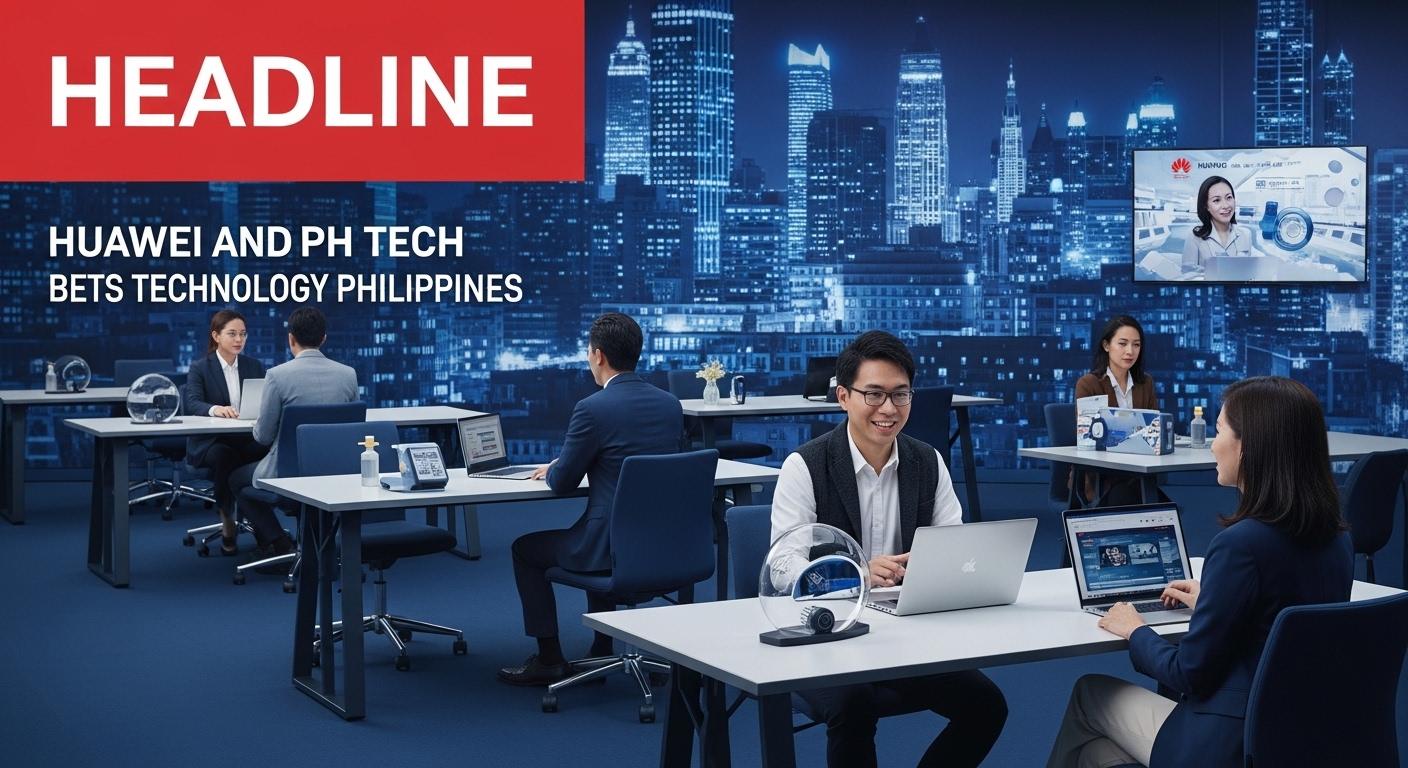
Editorial illustration of Huawei's technology footprint in the Philippines, including data centers and 5G IoT networks.
Updated: March 16, 2026
Across the Philippines, the tech scene is evolving rapidly as local ambitions collide with international supply chains. The frame of bets Technology Philippines helps observers gauge how Huawei and other global players balance price, performance, and risk as data centers multiply, 5G networks expand, and IoT devices become commonplace in markets from Manila’s business districts to rural barangays. This analysis looks beyond headlines to map causal links between policy choices, market incentives, and the practical realities facing businesses and households that rely on faster, more reliable digital services.
Huawei’s Position in the Philippines Tech Ecosystem
Huawei remains a consequential, if contested, player in the regional telecoms supply chain. In the Philippines, network operators seek reliable gear and transparent support structures as they migrate from slower 4G to more capable 5G layers. The debate is not only about performance or price; it is about resilience against weather-related outages, supply chain diversification, and the ability to sustain maintenance across a vast archipelago. Public procurement rules, import controls, and vendor risk assessments shape who can bid for major builds, and Huawei’s role reflects broader tensions between accelerating digital inclusion and safeguarding sensitive infrastructure. For local businesses, the implication is clear: a healthy ecosystem requires a mix of vendors, clear standards, and predictable servicing windows to minimize downtime during storms or earthquakes.
Data Center Investment and Local Capacity
PH data center development has become a focal point for reducing latency, keeping data closer to users, and enabling local cloud services. The government and private sector are increasingly betting on local facilities to bolster disaster resilience and data sovereignty. Yet heat, humidity, and energy costs remain substantial engineering challenges in tropical climates. Cooling systems, powered backup, and disaster-ready sites demand capital investment and skilled operation—factors that influence who builds, who operates, and how quickly capacity scales to match demand from urban centers and rural gateways. In this context, Huawei and other equipment vendors are evaluated not just on equipment quality but on their ability to integrate with local power grids, meet strict electrical and fire-safety standards, and support redundant paths to keep services online when weather disrupts the grid. The dynamic links data-center strategy to broader national goals: improved e-government services, more robust supply chains for SMEs, and a broader base for cloud-based education and healthcare applications.
5G, IoT, and the Race to the Edge
The Philippines’ push to extend 5G coverage intersects with a rising tide of IoT use cases—from smart logistics and asset tracking to smart agriculture. Partnerships between IoT platforms, telecom operators, and device manufacturers will define how quickly edge computing becomes practical in the country. A few signals from the regional tech press suggest that IoT connectivity management is moving toward more centralized, scalable solutions, enabling operators to monitor networks and devices across archipelagic geographies with better fault isolation and faster recovery times. Within this landscape, consumer devices and content-creation tools—such as compact, camera-enabled phones—are fueling demand for more capable, cost-efficient platforms that can stream high-quality content from remote sites. For policy makers and buyers, the question is how to balance universal access with security, ensuring that edge devices and gateways are audited, updated, and interoperable across vendors.
Policy, Security, and Local Partnerships
Security, privacy, and data governance sit at the core of any credible technology strategy in the Philippines. The evolving regulatory framework requires transparent supply chains, clear device-level security standards, and ongoing oversight of how equipment is sourced and maintained. Local partnerships—whether with data-center operators, telecoms, or system integrators—can reduce risk by ensuring that service-level commitments align with real-world use in dense urban networks and island communities. Huawei’s footprint will be judged not only by technical merit but by its willingness to cooperate with regulators, participate in open standards, and contribute to local capacity-building programs for engineers, technicians, and policymakers. The overarching aim is to enable a more resilient digital economy without sacrificing security or public trust, a balance that will influence investment decisions across the bets Technology Philippines landscape.
Actionable Takeaways
- Policymakers should publish clear data-sovereignty and security guidelines that apply to all vendors, reducing uncertainty and encouraging legitimate competition.
- Operators and government agencies ought to diversify the vendor base for critical infrastructure, combining trusted local partners with proven international suppliers to reduce single-point risk.
- Businesses should plan for edge computing and robust backup strategies to ensure continuity during extreme weather and network congestion.
- Data-center developers should prioritize local energy efficiency, cooling resilience, and access to reliable power supplies to keep operating costs in check.
- Industry players should invest in local workforce development—engineers, technicians, and cybersecurity experts—to strengthen the PH technology ecosystem.
- Consumers and small businesses can expect improved service quality as 5G and IoT deployments mature, provided privacy and security controls keep pace with innovation.