Philippines digital infrastructure with data centers and 5G towers amid a cityscape at dusk.
Updated: March 16, 2026
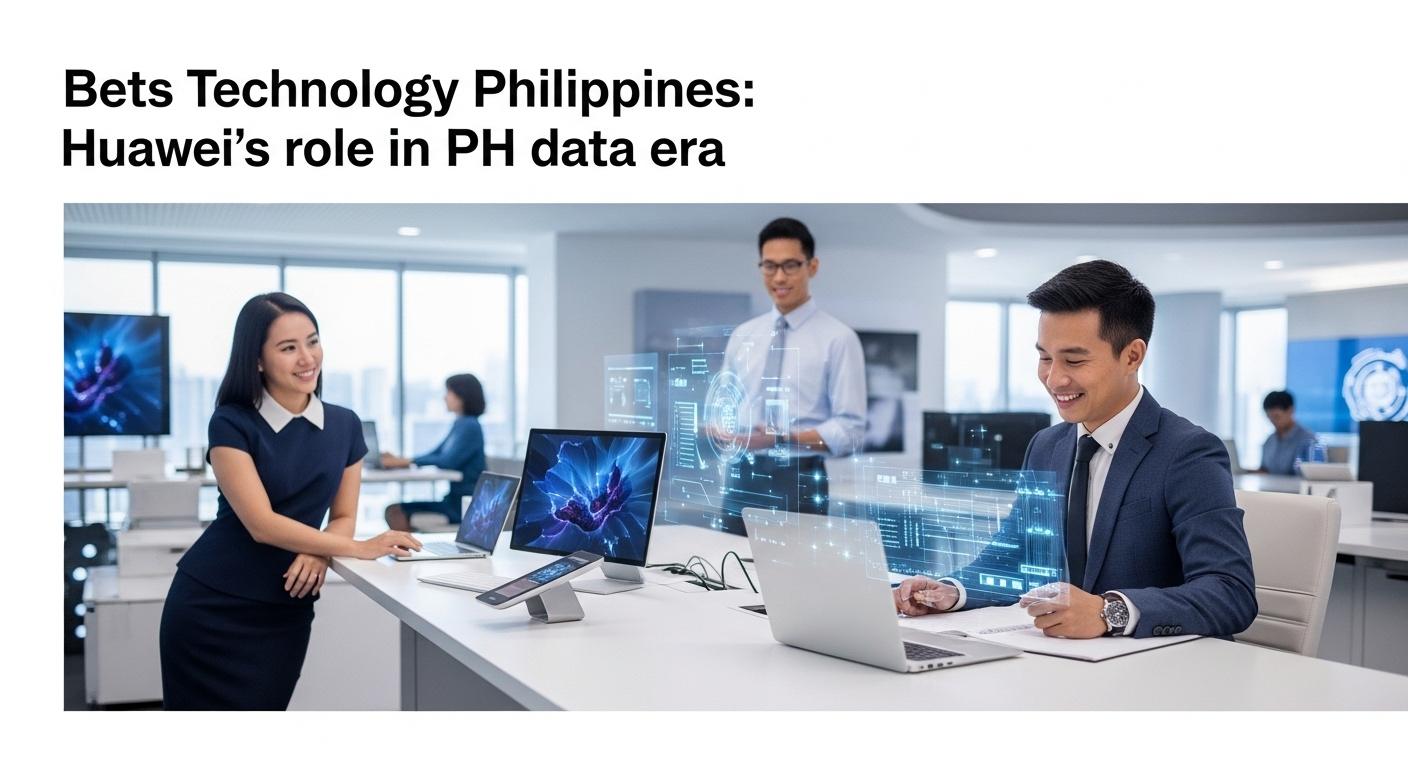
In the Philippines, bets Technology Philippines is moving from a talking point to a strategic lens on how the country builds its digital future. The convergence of local data centers, rapid 5G deployment, and a growing Internet of Things (IoT) footprint is reshaping how operators, regulators, and enterprises assess risk and opportunity. The central question is not merely technical capability, but who controls the data, how energy is consumed, and whether reliance on specific vendors accelerates or constrains the PH market’s long-term resilience. This analysis weighs the implications for Huawei and other players as the Philippines seeks reliable, affordable technology that can weather climate and policy headwinds alike.
Global tech shifts meet PH market realities
The technology world is tilting toward edge computing, cloud migration, and data localization. For the Philippines, these shifts imply a demand for more regional data centers, better cooling technologies, and improved energy management to support round-the-clock services—from government portals to consumer apps. A tropical climate amplifies the cost and complexity of cooling, making energy efficiency a central competitive differentiator for data centers and network hubs. While global players promote scalable solutions, the PH market must balance cost, reliability, and speed with local constraints such as power quality and disaster resilience. In this context, the PH data-center push is not just about capacity but about how quickly and safely information can move from device to decision, even when weather or grid stress tests the system.
This backdrop helps explain why the conversation around Huawei, local data centers, and a broader vendor ecosystem is more than a technology debate. It centers on whether PH ventures can harness international best practices while maintaining clear governance over data and security. The Philippines’ PCI-ready, privacy-first posture means performance alone won’t win deployments; vendors must demonstrate robust risk management, transparent procurement, and clear paths for local workforce development.
Huawei’s positioning in PH data and 5G
Huawei’s footprint in the Philippines’ 5G and network modernization story is part of a larger global narrative about how equipment and service providers influence connectivity timelines and cost structures. In PH, operators are pursuing faster spectrum release, tighter integration of core networks with radio access networks, and interoperable ecosystems across multiple vendors. Huawei’s role, when present, is not just about infrastructure hardware; it’s also about software, services, and local partnerships that can accelerate network rollout while complying with Philippine data governance standards. This positioning interacts with regulatory scrutiny, national security considerations, and the evolving expectations of consumers who increasingly rely on ubiquitous mobile and fixed broadband. The policy environment will continue to determine how quickly and at what price 5G and related services scale, and whether PH customers experience uniform quality across urban and rural areas.
For Huawei and other vendors, the PH market offers a test bed for modular, scalable deployments that can adapt to varying city profiles—from dense metropolitan zones to remote communities. The practical challenge is ensuring that equipment, software, and services align with local requirements for data residency, cybersecurity, and maintenance, without constraining the speed of innovation. In a market where partner ecosystems matter, joint ventures and local system integrators may become as important as hardware specifications to keep projects on schedule and within budget.
The role of local data centers and energy dynamics
Local data centers are a critical piece of PH’s digital plan. They lower latency, support disaster recovery, and enable local data processing that can reduce cross-border data movement. But the economic and environmental calculus is nuanced. Cooling demand in a hot, humid climate drives energy consumption up, making efficient cooling systems—such as advanced hot-aisle containment, optimized airflow, and low-power components—essential to profitability. Energy reliability also matters: outages or voltage fluctuations can cascade into service interruptions that undermine user trust and vendor credibility. In this environment, partnerships that prioritize energy efficiency and renewable integrations can become a core differentiator for PH data centers and the networks they support.
IoT connectivity—illustrated by collaborations that blend Telco infrastructure with IoT platform management—adds another layer. The Aeris-Globe collaboration in the region signals a trend where connectivity management, device provisioning, and edge analytics converge in a single, regionally anchored solution. For PH users, this could translate into more resilient smart-city and manufacturing applications, where local data handling reduces latency and improves governance. Yet it also means that the economics of data localization and edge computing become more sensitive to power costs, equipment durability in tropical conditions, and the availability of skilled technicians to maintain complex distributed systems.
Policy, privacy, and local partnerships
Policy and privacy considerations shape which technology paths are feasible in the Philippines. A robust data protection framework, clear guidelines on vendor risk management, and transparent procurement processes are essential for attracting investment while safeguarding citizens. Local partnerships—between data center operators, telecom providers, and device manufacturers—are not simply commercial ties; they are the governance infrastructure that determines how data flows, who can access it, and under what conditions. In this context, bets Technology Philippines reflects a strategic stance that the PH market can grow by combining global technology with strong local oversight. The policy environment will need to support interoperable standards, facilitate skills development, and ensure that incentives for foreign technology uptake do not undermine domestic capabilities or data sovereignty.
Taken together, the PH trajectory suggests that Huawei and other vendors will succeed not merely by selling equipment but by delivering integrated, compliant solutions that address network performance, data governance, and energy efficiency. This requires a careful balance: achieving rapid deployment and scale while building trust with regulators, service providers, and the public. For Philippine consumers and businesses, the ultimate signal is not only faster speeds but reliable, secure, and locally accountable digital services that can weather climate and policy volatility.
Actionable Takeaways
- Policymakers should pursue transparent vendor risk assessments and procurement frameworks that balance speed with security, reliability, and data sovereignty.
- Telcos and data-center operators ought to prioritize energy efficiency, phased edge deployments, and resilience to outages to maximize return on investment and service continuity.
- Enterprises should evaluate data residency options and vendor commitments to local capabilities before committing to multi-region cloud or IoT contracts.
- Vendors, including Huawei, need to couple hardware exports with strong local partnerships, skills development programs, and clear adherence to PH regulatory standards.
- Consumers and public institutions will benefit from predictable pricing, transparent service levels, and governance around data access and privacy in the 5G era.
Source Context
Context and background sources that informed this analysis include: